
Report
MALL SANJEEV KUMAR
- Affiliation
- Graduate School of Science and Technology
- Course and Grade
- Doctoral Program, second year student
- Research Themes
- Exploring Detonation Waves: Fundamental Study of Hydrogen Detonation and Its Interaction over Water
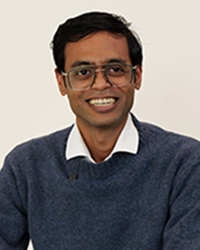
Reason for entering the doctoral program (Who did you consult with?)
I have always been curious about how things work. As a child, I had a habit of taking things apart such as RC cars, toy airplanes, anything mechanical not because they were broken, but because I wanted to understand them. I have always enjoyed reading and learning widely, from social topics to science, and I was particularly fascinated by space, astronomy, and physics.
Choosing mechanical engineering for my bachelor’s degree became a turning point. Engineering showed me that asking “why” could be followed by “how,” and sometimes even “how fast.” Alongside my engineering studies, I continued exploring other fields: music, medicine, linguistics, literature, and film. Looking back, this habit of moving across disciplines quietly prepared me for research life.
I later received the MEXT (Japanese Government) Scholarship to pursue my master’s degree, where I conducted research related to high-speed flows. Experiencing research at that level made it clear that I wanted to continue in academia long-term.
After finishing my master’s program, I entered industry as an R&D engineer. This was partly shaped by the timing of the COVID-19 period, which affected opportunities and the overall research environment. Although this was not my original plan, it turned out to be an important phase. Industry taught me that equations eventually must survive contact with reality, budgets, schedules, and hardware that refuses to behave ideally. That experience reinforced my belief that a PhD is not about producing complexity for its own sake, but about finding what has been missed and understanding it deeply.
Before deciding to pursue a doctoral degree, I consulted extensively with my wife, my family, my former supervisor, and close friends. Most were not surprised by my decision; in fact, many had been expecting it. Their support helped transform a long-standing intention into a concrete step. While searching for a university, I was fortunate to find Professor Edyta at the Aerospace and Combustion Laboratory at Sophia University. Meeting her before beginning my studies amplified my ambition to delve deeper into research; it felt as though we were exploring the same dimensions of the universe, which cleared any skepticism I had about choosing the right laboratory. She continues to be a major source of motivation; if pursuing a PhD indefinitely were an option, I would happily continue under her guidance.
Your research
My research focuses on understanding the fundamental behavior of hydrogen gas when it detonates (burns so fast that the reaction and its effects happen almost at the same instant), especially when water or water vapor enters the picture. As hydrogen becomes increasingly important in the transition toward cleaner energy systems, understanding its behavior under extreme conditions becomes not just interesting, but necessary.
In my work, I conduct controlled experiments to observe how hydrogen transitions from combustion to detonation and how the resulting waves behave over water. This is a particularly lively problem: chemical reactions, fluid motion, and extremely fast wave propagation all occur at once, often refusing to simplify themselves. Capturing and interpreting these processes requires careful observation, and occasional negotiations with experimental equipment. Unlike ordinary burning, detonation does not slowly spread; it happens all at once, leaving almost no time for the system to adjust. Studying hydrogen detonation often feels like trying to read a story that finishes before you realize it has started, while the pages are on fire and slightly wet. Every experiment reveals something new, and just when the system seems understood, it reminds you that nature always has one more surprise prepared. This research is closely connected to hydrogen safety. Hydrogen can be generated or stored in various industrial and energy-related environments and understanding its behavior under different conditions is essential for designing safer systems. I hope that this work will serve as a foundation for future research and help inform safer and more reliable hydrogen use as society moves forward.
The attractiveness of SPRING (what SPRING has done for you)
One of the biggest challenges in doctoral life is funding. Some people have the financial means but not the desire to pursue a PhD, while others have the motivation but not the resources. SPRING removed the constant background noise of financial stress and part-time work, allowing me to focus fully on research. Not having to divide my attention between survival and scholarship made my research life more stable, productive, and honestly, more enjoyable. Beyond financial support, SPRING encouraged me to think beyond my discipline. It helped me see engineering not just as a specialization, but as a tool that can be applied almost anywhere if you learn how to communicate it well. Through SPRING, I participated in various seminars and collaborative activities that pushed me outside my usual academic boundaries. One particularly memorable experience was participating in RENKEI, a Japan–UK collaborative program focused on Net Zero initiatives. For five days in the UK, I worked with a team that included engineers, sociologists, lawyers, and medical professionals. It was my first time discussing climate change and sustainability in such a multidisciplinary setting, and it was both challenging and refreshing. I realized that not everyone speaks in equations and that this is not a weakness but an opportunity.
your future prospects (including your career)
I am aiming to complete my PhD next year and bring together my research into a solid doctoral thesis. I plan to continue improving my experimental work, publishing results, and sharing my findings at conferences.
I look forward to continuing as a postdoctoral researcher and eventually working as a university faculty member. I would like to pursue a career that balances research with practical relevance, while also mentoring students and helping them navigate the same mixture of excitement and confusion that comes with research life.
A few words for prospective SPRING students
PhD life comes with many challenges: financial pressure, isolation, uncertainty, and personal growth that is not always comfortable. SPRING is a program that eases many of these pressures at once and allows you to focus on becoming the researcher you want to be.
Along with funding, SPRING offers many opportunities for international exposure, collaborations, and research exchanges. If you are eligible, I strongly encourage you to apply. It is an opportunity that can significantly shape both your research life and your personal growth.
Other (things you would like to talk about: participation in MIRAI, participation in international conferences, doctoral days in Sophia University etc.)
As a SPRING scholar, I participated in several international conferences in my first year, a five-day workshop in the UK, a 15-day conference in Australia, and a five-day conference in Canada. These experiences felt like “research-vacation trips” long days of academic discussion followed by exposure to new places and perspectives. SPRING supported my participation and funded these research trips, including an oral presentation in Australia and Canada.
I also greatly value my doctoral life at Sophia University. The environment, especially within my laboratory, balances serious research with human humor. We work hard, but we also laugh, discuss freely, and support one another. That balance has been essential in making the long research journey sustainable and meaningful.